Hisense QD7 vs TCL QM7K: Which 2025 Mini LED TV Wins?
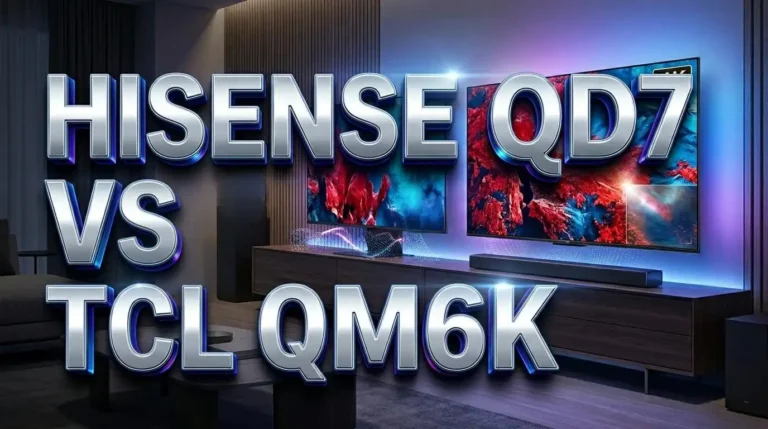
The Mini LED TV market is hotter than ever, and two models keep dominating buyer shortlists. The Hisense QD7 and the TCL QM7K both promise punchy colors, deep blacks, and gaming features at prices that undercut the big premium brands. But which one actually delivers the better experience for movies, sports, and console play?
This guide breaks down every key difference between these two 2025 mid range stars. You will learn how they compare in brightness, contrast, software, sound, and gaming.
By the end, you will know exactly which TV fits your room, your budget, and your viewing habits. Let’s get into it.
Key Takeaways At A Glance
- The TCL QM7K is the brighter and more contrast rich TV, with up to 2,500 local dimming zones and around 3,000 nits of peak brightness in larger sizes.
- The Hisense QD7 is the better budget pick, often priced lower while still offering Mini LED, Quantum Dot color, and Dolby Vision support.
- Gaming feels great on both, but the QM7K has a stronger 144Hz panel across more sizes, while the QD7 limits 144Hz to bigger models.
- The QM7K runs Google TV, which most users find smoother and more flexible than the QD7 Fire TV interface.
- Sound is a clear win for the QM7K, thanks to Bang and Olufsen tuned speakers with stronger bass.
- Pick the QD7 to save money, and pick the QM7K for a noticeable picture and audio upgrade.
Hisense QD7 Quick Overview

- MINILED | UP TO 600 NITS PEAK BRIGHTNESS: See more contrast on the field and off. Lots of tiny LEDs make a major difference when it comes to...
- QLED COLOR: See the exact hue of every blade of grass on the field and every line on the court. QLED Color is made up of quantum dots—very...
Last update on 2026-10-25 / Affiliate links / Images from Amazon Product Advertising API
The Hisense QD7 is a 2025 Mini LED TV built for shoppers who want premium features without a premium price. It uses Quantum Dot color, a Mini LED backlight, and supports Dolby Vision, Dolby Vision Gaming, HDR10+, and Dolby Atmos. The 65 inch model runs on Fire TV with hands free Alexa.
The QD7 reaches around 600 nits of peak HDR brightness in mid sizes, which is a clear jump over the older QD6. Larger sizes like the 75 and 85 inch step up to a 144Hz native panel, which is great for sports and gaming. Smaller sizes stick to 60Hz, so size choice matters a lot here.
This TV is easy to recommend for casual viewers who want vivid colors and solid HDR for under budget pricing. It is not the brightest or most refined Mini LED on the market, but it punches above its weight class.
Pros
- Strong value Mini LED with Quantum Dot color
- Supports Dolby Vision, Dolby Vision Gaming, and HDR10+
- Fire TV with Alexa is simple and family friendly
- 144Hz panel on bigger sizes for smooth gaming
Cons
- 55 and 65 inch sizes are limited to 60Hz
- Local dimming can show some blooming in dark scenes
- Sound output is average and benefits from a soundbar
TCL QM7K Quick Overview

- QD-Mini LED: TCL's QD-Mini LED combines the merits of QLED and OLED technologies, transforming the traditional backlight into lighting that...
- TCL Halo Control System: An advanced Technology Suite that includes the New Super High Energy LED Microchip, Super Condensed Micro Lens...
Last update on 2026-10-25 / Affiliate links / Images from Amazon Product Advertising API
The TCL QM7K sits one tier above the QM6K and aims directly at picture quality fans. It uses QD Mini LED tech, up to 2,500 precise dimming zones, and a peak brightness near 3,000 nits in the larger models. This is a real step up in HDR impact.
TCL pairs the panel with its Halo Control System, which sharpens local dimming and reduces blooming around bright objects on dark backgrounds. The TV runs Google TV, which gives you a clean app store, voice search, and smart home control through the Google Assistant.
Gaming is a strong suit. The QM7K offers a 144Hz native panel across all sizes, plus AMD FreeSync Premium Pro and a Game Accelerator that pushes refresh rates higher at lower resolutions. Audio is tuned by Bang and Olufsen, which adds a richer feel right out of the box.
Pros
- Up to 2,500 dimming zones with strong Halo Control
- Very high peak brightness near 3,000 nits
- 144Hz panel on every size, plus FreeSync Premium Pro
- Bang and Olufsen tuned speakers sound full
Cons
- Costs more than the Hisense QD7 in matching sizes
- Color accuracy out of the box may need calibration
- Google TV ads in the home screen can annoy some users
Picture Quality Comparison
Picture quality is where the TCL QM7K pulls clearly ahead. Its higher zone count and stronger contrast give it deeper blacks and brighter highlights at the same time. Watching a space scene or a dim thriller, stars and city lights pop while shadows stay inky.
The Hisense QD7 still looks great for the price, and most viewers in bright rooms will be happy. It handles SDR content well and shows punchy colors thanks to its Quantum Dot layer. The weakness shows up in dark room viewing, where blooming and weaker contrast become more visible.
If you mostly watch in a bright living room with lots of windows, the QD7 is enough. If you have a dedicated movie space or a darker room, the QM7K rewards you with much better depth. The gap is real, but it scales with your room conditions.
Brightness And HDR Performance
Brightness is the headline number, and the QM7K wins by a wide margin. Its larger sizes hit close to 3,000 nits in HDR, which lets bright highlights like sun reflections and explosions look almost lifelike. SDR brightness is also very strong, so glare is rarely an issue.
The Hisense QD7 lands closer to 600 nits in HDR, which is fine but not flagship grade. HDR scenes still look more vivid than on a basic LED, but they lack the punch you get from the TCL. Some scenes can feel slightly flat in side by side viewing.
Both TVs support Dolby Vision and HDR10+, which is rare and welcome. So you get format flexibility no matter the streaming app. Still, raw brightness power tilts this category strongly toward the QM7K.
Local Dimming And Contrast
Local dimming is the real star of any Mini LED TV. The TCL QM7K uses up to 2,500 dimming zones depending on size, with the Halo Control System keeping bright objects sharp without leaking light into dark areas. Contrast looks bold and clean.
The Hisense QD7 has fewer zones and a less refined dimming algorithm. It still beats edge lit TVs by a wide margin, but blooming around subtitles or stars in a black sky is more noticeable. Casual viewers may not care, but home theater fans will.
If contrast is your top priority, the QM7K is the obvious pick. It produces near OLED level black depth in many scenes, especially in a dim room. The QD7 plays it safe and prioritizes overall brightness instead of pixel level precision.
Color Accuracy And Quantum Dot Performance
Both TVs use Quantum Dot tech, which gives them rich, saturated colors and a wide color gamut. Reds look red, greens look natural, and skin tones feel believable on both panels straight from the box.
The TCL QM7K has slightly stronger color volume thanks to higher brightness, which keeps colors vivid even in HDR highlights. However, some reviewers note that out of box color accuracy on the QM7K leans warm and may benefit from calibration. The QD7, in contrast, is a bit more neutral by default.
For most viewers, both will look excellent. If you stream a lot of nature documentaries, sports, or animated movies, you will enjoy either TV. Color nerds with calibration tools may prefer the QD7’s neutrality, while everyone else will love the punchier QM7K.
Gaming Features And Refresh Rate
Gamers have a lot to like in both TVs. The TCL QM7K offers a native 144Hz panel across every size, plus a Game Accelerator mode that pushes 240Hz at lower resolutions. It supports AMD FreeSync Premium Pro, ALLM, and VRR, making it a strong PS5, Xbox Series X, and PC partner.
The Hisense QD7 also offers 144Hz, but only on larger sizes like 75, 85, and 100 inch. Smaller models drop to 60Hz, which is a big deal for gamers who want a 65 inch upgrade. The QD7 still supports Dolby Vision Gaming and FreeSync, which is a nice touch.
If you are a console or PC gamer who wants smooth motion at any size, the QM7K is the safer choice. If you are buying a big screen and budget matters more than every gaming feature, the QD7 still keeps up.
Smart TV Platform And Software
Software shapes daily use, and the two TVs go very different ways. The TCL QM7K runs Google TV, which feels modern, fast, and personalized. You get app suggestions, Google Cast support, and smooth voice search through Google Assistant.
The Hisense QD7 uses Fire TV, which works well if you are already in the Amazon ecosystem. Alexa hands free voice control is helpful, and Prime Video integration is excellent. However, the home screen leans hard on Amazon promotions, which can feel cluttered.
Most users find Google TV more flexible and less ad heavy, though both platforms have ads. If you own Echo devices, the QD7 fits naturally. If you prefer Chromecast and Google services, the QM7K is the better match.
Sound Quality And Speakers
Built in TV sound is usually average, but the TCL QM7K stands out here. Its speakers are tuned by Bang and Olufsen and include a small subwoofer, which gives dialog clarity and surprising bass for a flat panel. Most users can skip a soundbar for casual viewing.
The Hisense QD7 sounds fine but flatter. Dialog is clear and Dolby Atmos decoding works, but bass is weak. Action scenes feel thin compared to the QM7K. A soundbar fixes this easily, but it adds to the total cost.
If you plan to use TV speakers most of the time, the QM7K saves you money in the long run. If you already own a soundbar or AV receiver, this gap matters much less, and the QD7 becomes more attractive.
Design And Build Quality
Both TVs share a familiar slim bezel modern look. The QM7K has a slightly more premium feel, with a sturdier stand and a thinner body in many sizes. Cable management is simple, and wall mount holes follow standard VESA spacing.
The Hisense QD7 keeps things basic but clean. Plastic build is fine, and the stand is sturdy enough for most TV stands. It does not feel cheap, but it does not feel luxury either.
For most buyers, neither design will be a deal breaker. The TCL just looks a little more high end on a stand. If you wall mount your TV, you will barely notice the difference between them.
Price And Value Comparison
This is where the Hisense QD7 fights back. Across most sizes, the QD7 is priced lower than the QM7K, sometimes by a few hundred dollars. For shoppers who want big screen Mini LED on a tight budget, it is hard to beat.
The TCL QM7K asks for more money but delivers more performance. You get higher brightness, more zones, better software, and better sound. The price gap reflects real upgrades, not just brand markup.
If your budget is firm and you want the most screen size for your money, choose the QD7. If you can stretch a bit and want a TV that feels closer to flagship class, the QM7K is the smarter long term buy. Both deliver strong value, just in different ways.
Who Should Buy The Hisense QD7?
- MINILED | UP TO 600 NITS PEAK BRIGHTNESS: See more contrast on the field and off. Lots of tiny LEDs make a major difference when it comes to...
- QLED COLOR: See the exact hue of every blade of grass on the field and every line on the court. QLED Color is made up of quantum dots—very...
Last update on 2026-10-25 / Affiliate links / Images from Amazon Product Advertising API
The Hisense QD7 is the right pick for value first shoppers. It works best for casual streamers, sports fans in bright rooms, and families who want a big upgrade from an older LED TV. The Fire TV interface feels right at home for Alexa and Prime users.
If you watch in a room with a lot of natural light, the QD7’s brightness is enough, and minor blooming will rarely show up. Gamers who want a 75 inch or larger screen also get the 144Hz panel, which keeps things competitive.
Who Should Buy The TCL QM7K?
- QD-Mini LED: TCL's QD-Mini LED combines the merits of QLED and OLED technologies, transforming the traditional backlight into lighting that...
- TCL Halo Control System: An advanced Technology Suite that includes the New Super High Energy LED Microchip, Super Condensed Micro Lens...
Last update on 2026-10-25 / Affiliate links / Images from Amazon Product Advertising API
The TCL QM7K is the right pick for picture quality fans. It works best for movie lovers, dark room viewers, serious gamers, and anyone who wants strong built in sound. Google TV makes daily use clean and quick.
If you watch a lot of HDR movies, prestige TV, or play modern console games, the QM7K rewards you with deeper blacks, brighter highlights, and smoother motion at every size. Halo Control keeps blooming under control, even in tough scenes.
Final Verdict: Which One Should You Buy?
Both TVs are great Mini LED options for 2025, but they serve different shoppers. The Hisense QD7 wins on price, and the TCL QM7K wins on performance. There is no wrong answer, only the right answer for your room and your wallet.
If you watch in a bright space, want a big screen, and like saving money, the QD7 is a smart buy. If you watch in a dim room, want premium HDR impact, and care about sound and gaming, the QM7K earns its higher price.
For most buyers who can stretch the budget, the TCL QM7K is the better long term TV. For anyone who needs the most screen for the lowest price, the Hisense QD7 is hard to beat.
Frequently Asked Questions
Is the TCL QM7K brighter than the Hisense QD7?
Yes. The QM7K reaches near 3,000 nits of peak HDR brightness in larger sizes, while the QD7 lands closer to 600 nits. This makes a clear difference in HDR highlights and bright room visibility.
Do both TVs support Dolby Vision?
Yes. Both the Hisense QD7 and TCL QM7K support Dolby Vision and HDR10+, plus Dolby Atmos audio. This means you can enjoy premium HDR content from Netflix, Disney Plus, and Apple TV Plus on either model.
Which TV has more local dimming zones?
The TCL QM7K has more zones, with up to 2,500 in larger models and a stronger Halo Control algorithm. The Hisense QD7 has fewer zones and slightly more visible blooming in dark scenes.
Is the Hisense QD7 good for gaming?
Yes, but with a catch. 144Hz is only available on the 75, 85, and 100 inch sizes. Smaller models cap at 60Hz. The TCL QM7K offers 144Hz across every size, which is better for gamers shopping in 55 or 65 inch.
Which smart TV platform is better, Fire TV or Google TV?
Most users prefer Google TV, which is on the QM7K, for its speed and flexibility. Fire TV, on the QD7, is excellent for Alexa and Prime Video fans but leans heavily on Amazon promotions in its home screen layout.
Do I need a soundbar with these TVs?
The TCL QM7K sounds good enough for most casual viewers thanks to its Bang and Olufsen tuned speakers. The Hisense QD7 benefits from a soundbar since its built in audio is thinner and weaker on bass.
Are these TVs worth it compared to a Sony or Samsung?
Yes. Both Hisense and TCL deliver most of the performance of pricier brands at a lower cost. You give up some processing polish and brand prestige, but you save hundreds of dollars on similar Mini LED quality.

Hi there! I’m Jinny, the tech enthusiast behind GadgetInsight. I spend my days unboxing the newest devices, diving deep into their features, and figuring out how they can genuinely improve your life – or if they’re worth your hard-earned money at all.