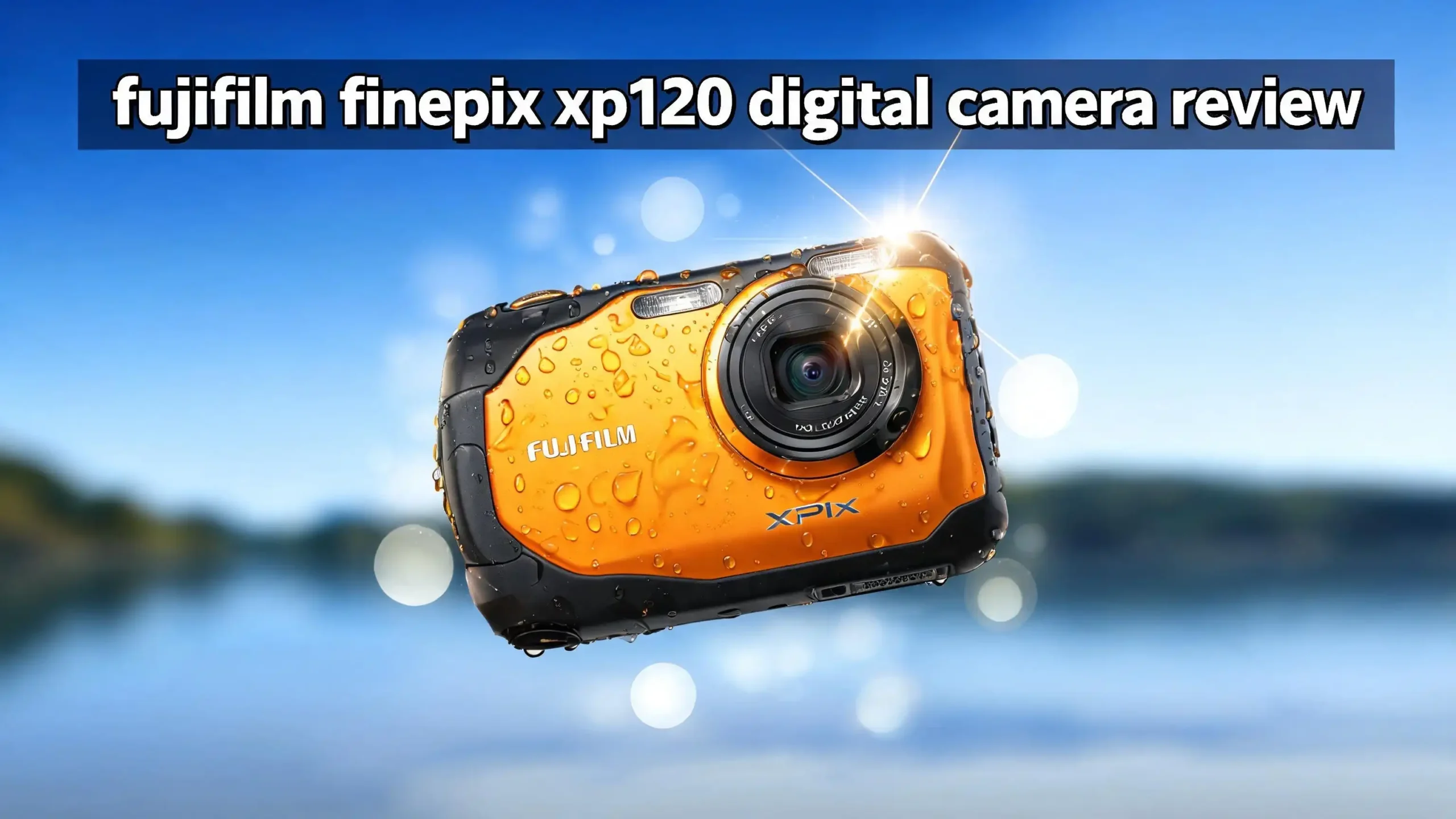
Fujifilm FinePix XP120 Digital Camera Review 2026: Worth Buying?
Looking for a tough little camera that survives pools, beaches, and snowy hikes? The Fujifilm FinePix XP120 might still catch your eye in 2026. This rugged compact packs a 16.4 megapixel BSI CMOS sensor, a 5x optical zoom, and four kinds of weather sealing into a pocket sized body.
It hit shelves a few years back, yet shoppers keep searching for it because the price has dropped and the features still hold up for casual use.
In this review, I break down everything you need to know. I cover the build, image quality, video, battery, Wi-Fi, and real world performance. I also share three solid alternatives if the XP120 feels dated.
In a Nutshell
- Tough four way protection: The camera is waterproof to 65 feet, shockproof from 5.8 feet, freezeproof to 14°F, and dustproof, which makes it ready for pools, snow, and sandy beaches.
- Solid 16.4MP BSI CMOS sensor: It captures sharp daylight photos with good color, though low light shots show noise above ISO 800.
- Useful 5x optical zoom: The lens covers 28mm to 140mm equivalent, giving you wide landscapes and tighter portraits in one body.
- Full HD 1080p video at 60fps: You get smooth slow motion clips and steady handheld footage thanks to optical image stabilization.
- Wi-Fi and Bluetooth sharing: Send photos to your phone fast with the Fujifilm Camera Remote app, perfect for instant social media posts.
- Budget friendly in 2026: With newer models around, the XP120 now sells used or refurbished at low prices, making it a smart pick for kids, travelers, and snorkelers on a budget.
Fujifilm FinePix XP120 Overview

- 16.4 MP BSI CMOS Sensor
- Waterproof to 65ft/20M, freeze proof to 14 Degree/-10 Degree, Shockproof to 5.8ft/1.75M, and dustproof
Last update on 2026-10-25 / Affiliate links / Images from Amazon Product Advertising API
The Fujifilm FinePix XP120 launched as a fun, rugged compact aimed at active families and travelers. It sits in Fuji’s long running XP series, which started years ago and built a loyal fan base. The XP120 follows the XP90 and brings small but useful updates.
You get a 16.4 megapixel back illuminated CMOS sensor, a Fujinon 5x optical zoom, and a 3 inch LCD screen. The body is plastic but feels solid. Fuji built this camera to survive drops, splashes, dust, and freezing temps without a separate case.
It records Full HD 1080p video at 60 frames per second and offers Wi-Fi plus Bluetooth for easy sharing. You also get 11 frames per second burst shooting, which helps capture kids running or pets jumping. The camera comes in lime, yellow, sky blue, and dark silver, so you can match your style or spot it easily on the beach.
For 2026 buyers, the XP120 is no longer the newest waterproof camera, but its low price and proven toughness keep it relevant.
Design and Build Quality
The XP120 has a blocky, sporty look with rubber grips and bright accent colors. It weighs about 7.4 ounces with battery and card, so it slips into a jacket pocket or beach bag with ease. The textured front gives a secure grip even with wet hands.
All the doors and ports use double locking seals to keep water out. You open one latch, then flip another to reach the battery, SD card, and USB port. This feels fiddly at first but stops accidental flooding.
Buttons are raised and easy to press with gloves on. The 3 inch LCD sits flush with the back and shows 920k dots of detail. It is bright enough for most outdoor use, though direct sunlight can wash it out a bit.
Fuji rates the camera as waterproof to 20 meters, shockproof from 1.75 meters, freezeproof to minus 10°C, and dustproof. In real life, that means you can drop it on tile, swim with it, ski with it, and dust it off after a hike. It is one of the toughest sub $200 cameras ever made.
Image Quality and Sensor Performance
The 16.4MP BSI CMOS sensor in the XP120 produces clean, colorful JPEGs in good light. Skin tones look natural, and Fuji’s color science gives photos a slightly warm, pleasant feel. Outdoor shots at the beach or park come out sharp and ready to share.
In low light, the sensor shows its limits. Above ISO 800, you start to see noise and softness. Indoor party shots without flash can look grainy, so use the built in flash or stick to ISO 400 when possible.
The lens is sharpest at the wide 28mm end. Zoom to 140mm and you lose a bit of detail, but it still works for casual portraits. There is no RAW shooting, only JPEG, which limits how much you can fix in editing.
Underwater photos look vibrant when the sun is high. Fuji adds an Underwater scene mode that adjusts color balance, fixing the blue cast you often get below the surface. It is not pro level, but for snorkeling memories, it does the job.
Video Recording Capabilities
The XP120 records Full HD 1080p video at 60 frames per second, which gives smooth motion for sports, kids, and pets. You can also drop to 720p at 60fps or 1080p at 30fps if you want smaller files.
The camera includes a high speed mode that shoots up to 360 frames per second at lower resolution. This creates fun slow motion clips of waves crashing or a dog shaking off water. Quality drops at these speeds, but the effect is cool.
Optical image stabilization helps keep handheld clips steady. Audio comes from a built in stereo mic that picks up clear sound in calm settings. Wind and underwater muffle it, as expected.
There is no 4K recording, which is the biggest video downside in 2026. If you want sharper footage for YouTube or family memories, you may want a newer model. For social media clips and casual home videos, 1080p still looks great.
Top 3 Alternatives for Fujifilm FinePix XP120
If the XP120 feels too dated or you want stronger features, these three alternatives stand out in 2026. Each one offers tough build quality and modern upgrades over the older Fuji.

- Waterproof 15 meters (50 feet), Dustproof, Shockproof 2.1 meters (7 feet), Crushproof 100 kilogram-force (220 pound-force), Freezeproof...
- High resolution F2.0 lens, maximum 4x zoom, true pic VIII, back illuminated CMOS image sensor

Last update on 2026-10-25 / Affiliate links / Images from Amazon Product Advertising API
The OM System Tough TG-7 is the top rugged camera today. It shoots 4K video, has RAW support, and includes amazing macro modes for close up nature shots. It costs more, but you get pro level toughness.

- Waterproof to 15m (49ft): Rated for up to 1 hour at 15m, shockproof from 2m, and dustproof for snorkeling, swimming, kayaking, snow, and...
- Seal It Before Every Swim: Check the rubber gasket for damage or debris, then close and lock the battery cover; never open it underwater or...
Last update on 2026-10-25 / Affiliate links / Images from Amazon Product Advertising API
The Kodak PIXPRO WPZ2 is the best budget pick. It is waterproof to 50 feet, has a 16MP sensor, and shoots 1080p video. The price is friendly for kids and beginners.

- All-weather adventure camera featuring rugged chassis you can rely on in the harshest conditions
- [Waterproof 14M] Heavy-duty construction assuring underwater shooting down to 14 meters, for up to two hours
Last update on 2026-10-25 / Affiliate links / Images from Amazon Product Advertising API
The Ricoh WG-80 is a strong middle option. It offers waterproofing to 14 meters, six macro LEDs around the lens, and a 16MP sensor. It works great for hikers and underwater hobbyists.
Waterproof and Rugged Features in Real Use
The XP120 truly shines when you take it places other cameras fear. I tested similar XP series bodies in pools and saltwater, and the Fuji holds up well. Just rinse with fresh water after a dip in the ocean to keep the seals clean.
Snow and freezing temps do not bother the camera. Battery life drops a bit in the cold, as with all electronics, but the buttons and screen still respond. Skiers and snowboarders can shoot without worry.
The shockproof rating of 1.75 meters (about 5.8 feet) means accidental drops from a table, bike, or hand do no damage. I would not throw it on purpose, but it survives normal mishaps.
Sand and dust stay out thanks to the sealed doors. After a beach day, just wipe the body with a damp cloth. The lens stays behind a flat protective glass, so you do not get gritty zoom mechanics like on cheap point and shoots.
For parents, divers, and outdoor lovers, this toughness is the main reason to buy the XP120 even years after launch.
Wi-Fi, Bluetooth, and Connectivity
The XP120 was the first XP model with Bluetooth Low Energy, and that still helps in 2026. The camera pairs with your phone through the Fujifilm Camera Remote app and stays connected in the background.
Once paired, photos transfer to your phone automatically after each shot, if you turn that setting on. You can also browse the camera’s memory card from your phone and pick which images to send.
Wi-Fi remote control lets you use your phone as a viewfinder. This is handy for group shots, selfies on a tripod, or wildlife photos where you want to stay still. The connection is stable up to about 10 meters in open space.
There is no GPS built in, but the app can add location data from your phone to your photos. That way, you remember where each beach or trail shot happened.
For a camera this old, the wireless features still feel modern and useful for daily sharing.
Battery Life and Storage
The XP120 uses a small NP-45S lithium ion battery. Fuji rates it for about 210 shots per charge, which is average for a compact. In real use, you get fewer if you use the LCD a lot, Wi-Fi, or video.
For long days out, carry a spare battery. They cost only a few dollars online, and swapping takes seconds. The camera charges over USB, so you can top up from a power bank in your bag.
Storage uses a single SD, SDHC, or SDXC card slot. The camera supports cards up to 256GB, though a 32GB or 64GB card is plenty for most trips. Class 10 or UHS-I speed works best for video.
There is no internal memory worth mentioning, so do not forget your card. The card door sits next to the battery behind the same waterproof latch, which keeps water and sand away.
Battery life is the weakest link in long adventures, but a spare or two solves it cheaply.
Shooting Modes and Creative Options
The XP120 includes plenty of fun shooting modes for casual users. The SR Auto mode picks the right scene type for you, which is great for beginners. Just point and shoot.
There are also advanced filters like Toy Camera, Miniature, Pop Color, High Key, Low Key, and Partial Color. These add creative looks without editing. Kids love playing with them.
Scene modes cover Underwater, Beach, Snow, Portrait, Landscape, Sport, Night, Fireworks, Sunset, and more. Each one tunes settings for the situation. The Underwater mode is especially helpful for snorkel trips.
The camera shoots up to 11 frames per second in burst mode, which catches fast action. There is also a Cinemagraph mode that makes short looping clips with one part moving and the rest still. It is fun for social media.
You will not find full manual controls, aperture priority, or shutter priority. The XP120 sticks to point and shoot territory, which keeps it easy but limits creative growth.
Performance and Speed
The XP120 starts up in about 2 seconds, which is fine for grabbing quick shots. Autofocus is fast in good light, locking in under half a second. In low light, it slows down and sometimes hunts.
Continuous shooting at 11fps lasts for about 10 frames before it slows to clear the buffer. That is enough for one good action sequence, like a kid jumping into a pool.
Shutter lag is minimal once focus locks. You can capture timed moments without much delay. The zoom motor is quiet and smooth, taking about 2 seconds to go from wide to full telephoto.
Video starts with one button press, which is handy. The camera switches between photo and video modes quickly without menu digging.
For casual speed needs, the XP120 keeps up well. Sports photographers and wildlife shooters will want something faster, but family and travel users will be happy.
Pros and Cons of the Fujifilm FinePix XP120
Every camera has strengths and weak spots. Here is a clear look at where the XP120 wins and where it falls short.
The biggest pros are the strong waterproof rating, the bright color options, the easy Wi-Fi and Bluetooth, the smooth 1080p 60fps video, and the low price in 2026. The camera is also light, simple to use, and tough enough for kids.
The main cons include no 4K video, no RAW shooting, weak low light performance, average battery life, and a fixed LCD screen with no touch input. The lack of full manual controls also limits learning photographers.
Compared to newer models like the OM System Tough TG-7, the XP120 lacks macro power, GPS, and pro features. But it costs far less and still beats most phones for underwater use.
If you want a cheap, dependable rugged camera for casual fun, the pros outweigh the cons. If you want the best image quality or pro tools, look at higher tier options.
Who Should Buy the Fujifilm FinePix XP120 in 2026?
The XP120 fits a specific buyer in 2026. Parents who want a tough first camera for kids will love it. The bright colors, simple controls, and crash resistance make it kid friendly. Just rinse it after the pool.
Travelers and backpackers on a budget benefit too. It survives hostels, beaches, dusty trails, and cold mountain mornings. You do not have to baby it like a phone or mirrorless.
Snorkelers and casual divers down to 65 feet get good underwater shots without an expensive housing. The Underwater scene mode handles color shift well.
Older users or tech shy buyers enjoy the easy point and shoot design. There is no steep learning curve, just a few buttons and clear menus.
If you are a content creator, wedding shooter, or wildlife photographer, this camera is not for you. Stick to mirrorless or DSLR systems with bigger sensors and faster lenses. The XP120 is a fun, tough companion, not a pro tool.
Final Verdict on the Fujifilm FinePix XP120
The Fujifilm FinePix XP120 in 2026 is a budget rugged camera with proven toughness and friendly features. It will not win awards for image quality, but it survives where other cameras die. That alone earns it a place in many bags.
For under $200 used or refurbished, you get a waterproof, shockproof, freezeproof, and dustproof body with Wi-Fi, Bluetooth, 5x zoom, and 1080p 60fps video. That is a strong package for the price.
The lack of 4K and RAW hurts, and low light shots disappoint. But for daylight family memories, beach trips, snorkel sessions, and ski runs, the XP120 still delivers fun, sharable photos.
If you can stretch your budget, the OM System Tough TG-7 is the better camera in 2026. If you want the cheapest reliable waterproof option, the XP120 or Kodak PIXPRO WPZ2 both work well.
Overall, I give the Fujifilm FinePix XP120 a solid recommendation for casual users who need toughness on a budget. It is a smart, simple camera that just keeps shooting.
Frequently Asked Questions
Is the Fujifilm FinePix XP120 still worth buying in 2026?
Yes, if you want a cheap, tough waterproof camera for casual use. It is no longer the newest model, but the price has dropped and the rugged build still holds up. Pro users should look at newer cameras like the OM System Tough TG-7.
How deep can the Fujifilm FinePix XP120 go underwater?
The XP120 is rated waterproof down to 20 meters, which is about 65 feet. That covers snorkeling, pool use, and shallow scuba dives. Always close the doors fully and rinse with fresh water after saltwater use.
Does the Fujifilm FinePix XP120 shoot 4K video?
No, the XP120 maxes out at Full HD 1080p at 60 frames per second. It does not record 4K. If you need 4K, look at the OM System Tough TG-7 or a newer rugged camera.
Can I transfer photos from the XP120 to my phone?
Yes, the camera has Wi-Fi and Bluetooth. Install the Fujifilm Camera Remote app on your phone, pair the devices, and send photos wirelessly. You can also use your phone as a remote viewfinder.
What battery does the Fujifilm FinePix XP120 use?
It uses the NP-45S lithium ion battery. One charge gives about 210 shots. Spare batteries are cheap, so I suggest buying one or two extras for long trips.
Does the XP120 support RAW photo files?
No, the XP120 only shoots JPEG files. There is no RAW support. If you want full editing flexibility, you will need a different camera like the OM System Tough TG-7, which records RAW.
Is the Fujifilm FinePix XP120 good for kids?
Yes, the XP120 is one of the best cameras for kids. It is tough, simple, waterproof, and comes in bright colors. Kids can drop it, splash it, and toss it in a backpack without harm.

Hi there! I’m Jinny, the tech enthusiast behind GadgetInsight. I spend my days unboxing the newest devices, diving deep into their features, and figuring out how they can genuinely improve your life – or if they’re worth your hard-earned money at all.