Huawei MateBook Fold vs Lenovo Yoga 9i 2026: A Complete Guide
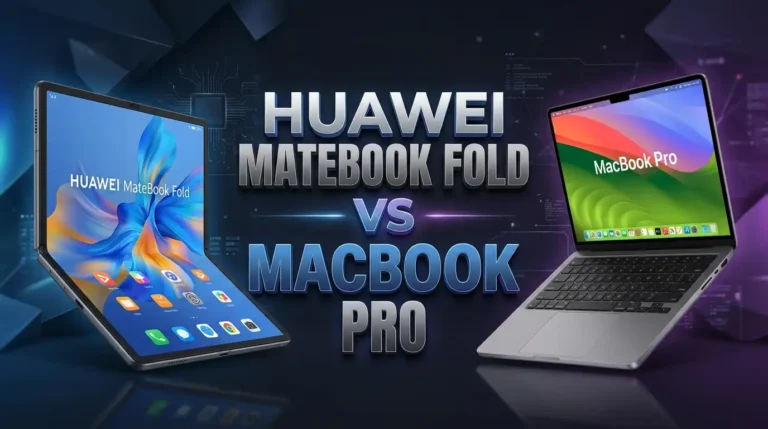
The laptop market has two very different visions of what a premium machine should look like. The Huawei MateBook Fold bets big on a foldable 18-inch OLED screen that collapses into a 13-inch form factor. The Lenovo Yoga 9i takes the proven 2-in-1 convertible route with a gorgeous 14-inch OLED panel and Intel’s latest Lunar Lake chip.
Both cost serious money. Both promise a premium experience. But they serve very different types of users.
So which one is right for you? This post breaks down every detail, from display quality and performance to battery life and everyday usability. Stick around because the differences might surprise you.
Key Takeaways
- The Huawei MateBook Fold is a foldable laptop that unfolds into an 18-inch OLED display and folds down to a compact 13-inch size. It weighs just 970g and runs on Huawei’s Kirin X90 processor with HarmonyOS 5. The starting price sits around $3,400, which puts it firmly in luxury territory.
- The Lenovo Yoga 9i Gen 10 Aura Edition is a 2-in-1 convertible with a 14-inch 2.8K OLED touchscreen. It runs Intel Core Ultra 7 258V, comes with 32GB of RAM, and uses Windows 11. Pricing starts at roughly $1,499 to $1,599, making it significantly more affordable.
- Display size is the biggest difference. The MateBook Fold gives you a massive 18-inch canvas for multitasking, while the Yoga 9i keeps things compact at 14 inches. Your work style will decide which is better for you.
- Battery life favors the Yoga 9i. Reviewers report up to 22 hours of battery life on the Yoga 9i thanks to the efficient Lunar Lake processor. The MateBook Fold manages around 10 hours with its 70Wh battery.
- Software ecosystems differ completely. The MateBook Fold uses HarmonyOS, which limits app availability outside China. The Yoga 9i runs Windows 11 with full access to all standard desktop applications.
- Availability matters too. The Yoga 9i is widely available worldwide on Amazon and Lenovo’s website. The MateBook Fold is primarily sold in China with limited global availability.
Huawei MateBook Fold: Overview and First Impressions

- Full HD 1080P IPS Screen: Immerse yourself in a vivid and accurate image with a 1920 x 1080 resolution IPS screen. Enjoy a wide...
- Portable Monitor with Stand: The ARZOPA portable monitor crafted with high-quality and durable metal materials, monitor with built-in...
Last update on 2026-09-03 / Affiliate links / Images from Amazon Product Advertising API
The Huawei MateBook Fold is one of the most ambitious laptops on the market right now. It features an 18-inch foldable OLED display that folds in half to create a 13-inch device. The concept is simple but the execution is impressive. You get a full-size workspace that fits inside a messenger bag.
Huawei built this device with a three-layer diamond aluminum structure. The result is a machine that weighs only 970 grams unfolded. That is lighter than most 13-inch laptops. The hinge mechanism feels solid and the fold crease is minimal during daily use.
The MateBook Fold runs HarmonyOS 5 instead of Windows. This is a critical detail for international buyers. HarmonyOS works well within Huawei’s ecosystem but lacks the broad software library that Windows users expect. The device ships with 32GB of RAM and up to 2TB of SSD storage.
Pros:
- Massive 18-inch foldable OLED display
- Extremely lightweight at just 970g
- 32GB RAM and up to 2TB storage
- Premium build quality with diamond aluminum body
Cons:
- Runs HarmonyOS instead of Windows
- Limited availability outside China
- Very high starting price around $3,400
- Crease visible at certain viewing angles
Lenovo Yoga 9i Gen 10 Aura Edition: Overview and First Impressions

- UNOPENED RETAIL PACKAGING, sold as configured by Lenovo. Includes one year of Courier or Carry-in Lenovo Warranty. Add up to 4 years Lenovo...
- Powered by the high performing Intel Core Ultra 7 258V processor, the Yoga 9i 2-in-1 laptop is ready to take on any challenge, big or small...
Last update on 2026-10-25 / Affiliate links / Images from Amazon Product Advertising API
The Lenovo Yoga 9i Gen 10 Aura Edition is a refined 2-in-1 convertible laptop. It features a 14-inch 2.8K OLED touchscreen with a 120Hz refresh rate and 1,100 nits peak brightness in HDR mode. The display alone makes this laptop stand out in a crowded premium segment.
Lenovo chose Intel Core Ultra 7 258V (Lunar Lake) as the processor. This chip delivers strong performance with exceptional power efficiency. The device includes 32GB of LPDDR5X RAM and a 1TB SSD. Everything here screams premium without the experimental risk of a foldable design.
The 360-degree hinge lets you use the Yoga 9i as a laptop, tablet, tent, or stand. It weighs around 1.4 kg, which is heavier than the MateBook Fold but still very portable. The build quality uses recycled aluminum and the overall fit and finish feels premium.
Pros:
- Stunning 2.8K OLED display with 120Hz and 1,100 nits HDR
- Outstanding battery life up to 22 hours
- Intel Core Ultra 7 258V with efficient NPU
- Full Windows 11 compatibility
- Widely available and well supported
Cons:
- 14-inch screen feels small for heavy multitaskers
- No discrete GPU for creative workloads
- Pen included but stylus experience is average
- Soundbar design adds slight bulk at the hinge
Display Quality Comparison
The display is where these two laptops diverge most dramatically. The Huawei MateBook Fold uses an 18-inch dual-layer OLED panel with a 3.3K resolution (3296 x 2472). Peak brightness hits 1,600 nits. The screen-to-body ratio sits at 92%, and the LTPO technology adjusts refresh rates dynamically.
The Lenovo Yoga 9i packs a 14-inch OLED with a 2.8K resolution (2880 x 1800) and a fixed 120Hz refresh rate. Peak HDR brightness reaches 1,100 nits. Colors are vivid, blacks are deep, and the glass touchscreen responds accurately to finger and pen input.
Both displays deliver excellent color accuracy and contrast. The MateBook Fold wins on sheer size and pixel count. The Yoga 9i wins on pixel density per inch and consistent brightness in everyday use. If you need a large canvas for design, video editing, or side-by-side document work, the MateBook Fold is hard to beat. For general use and portability, the Yoga 9i’s display is more practical.
Performance and Processing Power
The Huawei MateBook Fold runs on the Kirin X90 (Hi9600) processor with an integrated Maleoon 910 GPU. This is Huawei’s in-house chip. It handles productivity tasks, web browsing, and media consumption well. However, it does not match Intel or AMD chips in raw benchmark scores for demanding workloads.
The Lenovo Yoga 9i uses the Intel Core Ultra 7 258V processor. This Lunar Lake chip includes 4 performance cores, 4 low-power efficiency cores, and a powerful NPU for AI tasks. It delivers smooth performance across office work, photo editing, light video editing, and AI-powered features in Windows.
Both machines ship with 32GB of RAM, so memory is not a bottleneck on either device. The Yoga 9i has a clear advantage in software compatibility because Windows applications are optimized for Intel processors. The MateBook Fold performs well within HarmonyOS but faces limitations with professional software availability.
Battery Life and Charging
Battery life is a major factor for premium laptop buyers. The Lenovo Yoga 9i Gen 10 delivers a remarkable 22 hours of battery life according to PCMag’s testing. This is one of the longest-lasting laptops available today. The Lunar Lake processor’s efficiency makes this possible. Rapid Charge Express gives you 3 hours of use from just 15 minutes of charging.
The Huawei MateBook Fold has a 70Wh battery rated for about 10 hours of use. It supports up to 66W charging through USB-C. That is respectable for a foldable device with a large OLED panel but significantly less than the Yoga 9i.
If you travel often or work away from power outlets, the Yoga 9i is the clear winner here. The MateBook Fold’s battery life is adequate for a full workday but will not last through a long flight and an evening session without recharging.
Design and Build Quality
Both laptops feature premium materials and thoughtful design. The Huawei MateBook Fold uses a three-layer diamond aluminum construction. It measures just 7.3mm thin when unfolded and 14.9mm when folded. The device looks futuristic and feels high-end. The hinge is the star feature, folding the massive screen smoothly without visible wear.
The Lenovo Yoga 9i uses a recycled aluminum chassis with clean lines and a slim profile. The signature rotating soundbar hinge houses Bowers & Wilkins speakers. This gives the Yoga 9i excellent audio quality for a laptop. The overall design is elegant, professional, and suitable for business or personal use.
The MateBook Fold wins on innovation and portability relative to its screen size. The Yoga 9i wins on traditional build reliability and a more familiar form factor. Both feel like premium devices worth their price tags.
Keyboard and Input Experience
The Huawei MateBook Fold ships with an optional magnetic keyboard that attaches to the lower half of the screen when folded. This keyboard is thin and functional but does not match the typing feel of a traditional built-in keyboard. You can also use the lower portion of the screen as a virtual keyboard in tablet mode.
The Lenovo Yoga 9i features a built-in backlit keyboard with 1.5mm key travel. The keys are well-spaced, responsive, and comfortable for extended typing. The large precision touchpad sits below the keyboard and supports multi-finger gestures.
For daily productivity and long typing sessions, the Yoga 9i provides a better typing experience. The MateBook Fold’s magnetic keyboard works well for short sessions but feels cramped and lacks the feedback of a traditional laptop keyboard. The Yoga 9i also includes a stylus pen for drawing and note-taking on the touchscreen.
Ports and Connectivity
Port selection differs between these two machines. The Huawei MateBook Fold includes three USB-C 3.2 Gen 1 ports. One of these supports 66W charging. There is no USB-A, no HDMI, and no headphone jack. You will need dongles for legacy peripherals.
The Lenovo Yoga 9i Gen 10 offers two Thunderbolt 4 ports, one USB-C 3.2, and a USB-A port. It also has a 3.5mm headphone jack. Thunderbolt 4 lets you connect external displays, docks, and high-speed storage with a single cable.
The Yoga 9i wins on port versatility. Thunderbolt 4 support is a significant advantage for users who connect external monitors or use docking stations. The MateBook Fold’s USB-C only setup works fine with modern peripherals but limits flexibility.
Software Ecosystem and Compatibility
This is one of the most important differences between these two laptops. The Huawei MateBook Fold runs HarmonyOS 5. This operating system works well for Huawei phones and tablets. It supports basic productivity apps and Huawei’s app ecosystem. However, it does not run Windows applications like Microsoft Office desktop versions, Adobe Creative Suite, or most professional software.
The Lenovo Yoga 9i runs Windows 11 with full access to every desktop application available. You get Microsoft Office, Adobe apps, Steam, Visual Studio, and everything else. The Intel Core Ultra 7 258V also includes an NPU for AI features like Windows Copilot and on-device AI processing.
For most international buyers, the Yoga 9i’s Windows ecosystem is a decisive advantage. The MateBook Fold’s HarmonyOS is strong in China where Huawei’s app library is extensive. Outside China, the software limitations are a real deal-breaker for many professionals.
Audio and Speaker Quality
Audio quality matters for video calls, media consumption, and entertainment. The Lenovo Yoga 9i features a Bowers & Wilkins rotating soundbar built into the hinge. This speaker system is one of the best on any laptop. It delivers rich, full sound with clear highs and decent bass. Dolby Atmos support adds spatial audio.
The Huawei MateBook Fold includes a six-speaker system with quad microphones. The speakers produce clear and loud audio. The six-speaker layout takes advantage of the large device body to deliver wider stereo separation than most laptops.
Both laptops offer above-average audio. The Yoga 9i edges ahead with the Bowers & Wilkins partnership and dedicated soundbar design. The MateBook Fold’s six speakers hold their own for casual listening and video calls.
Price and Value for Money
Price is a clear differentiator in this comparison. The Huawei MateBook Fold starts at approximately $3,400 for the 32GB/1TB configuration. This premium price reflects the foldable display technology. The 2TB version costs even more. This is a luxury device aimed at early adopters and tech enthusiasts.
The Lenovo Yoga 9i Gen 10 Aura Edition starts at about $1,499 to $1,599 for the 32GB/1TB model. This price delivers a 2.8K OLED display, Intel’s latest processor, exceptional battery life, and a mature Windows ecosystem.
The Yoga 9i offers dramatically better value for most buyers. You get a proven design, long battery life, and full software compatibility for less than half the MateBook Fold’s price. The MateBook Fold’s value depends entirely on how much you want a foldable screen and are willing to accept HarmonyOS.
Who Should Buy the Huawei MateBook Fold?
The MateBook Fold is built for a specific type of buyer. You should consider it if you live in China or are comfortable with the HarmonyOS ecosystem. Creative professionals who need a large portable canvas for design or illustration will love the 18-inch foldable display. Tech enthusiasts who want the latest innovation will also find it appealing.
This device is also a good fit for frequent travelers who need a large screen in a compact body. The 970g weight means you carry an 18-inch display that weighs less than most 13-inch laptops. Business travelers can use one half for a document and the other for video calls.
It is not the right choice for anyone who relies on Windows applications, needs long battery life, or wants broad peripheral compatibility. The high price and limited global availability add further barriers.
Who Should Buy the Lenovo Yoga 9i?
The Lenovo Yoga 9i Gen 10 is the better choice for most laptop buyers. If you need a reliable 2-in-1 with a stunning OLED display, great battery life, and full Windows support, this is your laptop. Students, professionals, content creators, and casual users will all find it capable and enjoyable.
The Yoga 9i excels for people who work from cafes, planes, or meeting rooms. The 22-hour battery life means you rarely think about charging. The compact 14-inch form factor fits easily into any bag. Thunderbolt 4 ports make desk setups simple with a single cable connection.
If you want a dependable, premium laptop without experimental compromises, the Yoga 9i delivers exactly that. It does everything well and nothing poorly.
Final Verdict: Huawei MateBook Fold vs Lenovo Yoga 9i
The Lenovo Yoga 9i Gen 10 Aura Edition wins this comparison for the vast majority of buyers. It offers better battery life, a mature operating system, wider software support, and a significantly lower price. The 2.8K OLED display is gorgeous and the Intel Lunar Lake processor is both fast and efficient.
The Huawei MateBook Fold is an incredible piece of technology. The foldable 18-inch OLED display is breathtaking. The ultra-light build is impressive. But the HarmonyOS limitation, high price, and limited availability restrict its appeal to a niche audience.
Choose the MateBook Fold if you want cutting-edge foldable tech and live within Huawei’s ecosystem. Choose the Yoga 9i if you want the best all-around premium laptop experience. For most readers, the Yoga 9i is the smarter buy.
Is the Huawei MateBook Fold Worth the Premium Price?
The MateBook Fold costs more than double the Yoga 9i. That premium buys you a foldable 18-inch display and an incredibly light body. However, you sacrifice Windows compatibility, long battery life, and global support. The technology is impressive but the practical trade-offs are significant. For most users, the premium is hard to justify unless foldable screen technology is a must-have feature.
Early adopters and Huawei ecosystem users may find the price acceptable. Everyone else should wait for future generations that bring Windows support or lower pricing. The foldable laptop category is still young, and prices will likely drop as the technology matures.
FAQs
Can the Huawei MateBook Fold Run Windows Applications?
No. The Huawei MateBook Fold runs HarmonyOS 5, which is Huawei’s own operating system. It does not support Windows applications. You can use Huawei’s app ecosystem and web-based tools, but desktop software like Adobe Creative Suite or Microsoft Office (desktop version) is not available.
How Long Does the Lenovo Yoga 9i Battery Last on a Single Charge?
The Lenovo Yoga 9i Gen 10 Aura Edition delivers up to 22 hours of battery life in testing. Real-world use with mixed tasks like browsing, video calls, and document editing typically yields 12 to 16 hours. The Rapid Charge Express feature provides 3 hours of use from just 15 minutes of charging.
Is the Huawei MateBook Fold Available in the United States?
The Huawei MateBook Fold is primarily available in China. It has limited availability in select global markets. It is not widely sold in the United States through major retailers or Amazon. International buyers typically purchase it through third-party importers.
Does the Lenovo Yoga 9i Support Stylus Input?
Yes. The Lenovo Yoga 9i Gen 10 includes a stylus pen. The 2.8K OLED touchscreen supports pen input for drawing, note-taking, and handwriting. The 360-degree hinge lets you fold the screen flat like a tablet for a more comfortable pen experience.
Which Laptop Is Better for Content Creation?
The Lenovo Yoga 9i is better for content creation due to its Windows compatibility with professional software like Adobe Photoshop, Premiere Pro, and DaVinci Resolve. The Huawei MateBook Fold has a larger display, which is great for visual work, but HarmonyOS limits the professional tools available.
Can I Use an External Keyboard with the Huawei MateBook Fold?
Yes. The MateBook Fold supports Bluetooth keyboards and mice. Huawei also provides an optional magnetic keyboard that attaches to the device. You can pair third-party Bluetooth peripherals for a more traditional desktop-like experience.

Hi there! I’m Jinny, the tech enthusiast behind GadgetInsight. I spend my days unboxing the newest devices, diving deep into their features, and figuring out how they can genuinely improve your life – or if they’re worth your hard-earned money at all.