Fitbit Inspire 3 Review 2026: Is It Worth Buying?
Are you looking for a fitness tracker that does the job without burning a hole in your pocket? The Fitbit Inspire 3 has been a fan favorite since its launch in 2022. But here we are in 2026, and the question on everyone’s mind is simple. Does it still hold up?
This small, lightweight band packs in heart rate tracking, sleep monitoring, stress management tools, and up to 10 days of battery life. All for under $100. It sits on your wrist like it belongs there, and it quietly tracks your health around the clock.
In this detailed Fitbit Inspire 3 review for 2026, we break down everything. You will learn about its design, features, accuracy, battery, sleep tracking, and more.
Key Takeaways
- The Fitbit Inspire 3 retails for around $99.95 and often drops below that during sales. It remains one of the most affordable fitness trackers with a solid feature set. You get heart rate monitoring, sleep tracking, stress management, and 20+ exercise modes in a compact band.
- Battery life is a real standout, lasting up to 10 days on a single charge with normal use. If you turn on the always-on display, expect around 3 days. This means most users only need to charge it once a week or less.
- Sleep tracking is detailed and accurate, offering sleep stages (light, deep, REM) and an overall Sleep Score. Studies show Fitbit’s overall sleep accuracy is around 86% to 88%, making it reliable for everyday health awareness.
- It lacks built-in GPS, which is a drawback for runners and cyclists who want precise route mapping. It uses connected GPS through your phone instead, so you must carry your phone during outdoor workouts for location data.
- The Google account migration deadline is May 19, 2026. You must move your Fitbit account to a Google account to keep using your device and data. If you skip this step, your data will be deleted after July 15, 2026.
- For the price, it is hard to beat. PCMag, Wirecutter, and Business Insider still rank the Inspire 3 among the best budget fitness trackers available in 2026. It covers the basics well and suits beginners or casual fitness enthusiasts.
Fitbit Inspire 3 Design and Build Quality

- Inspire 3 is the tracker that helps you find your energy, do what you love and feel your best – all you have to do is wear it;
- Compatible with Apple iOS 16.4 or higher and Android OS 11.0 or higher
Last update on 2026-10-23 / Affiliate links / Images from Amazon Product Advertising API
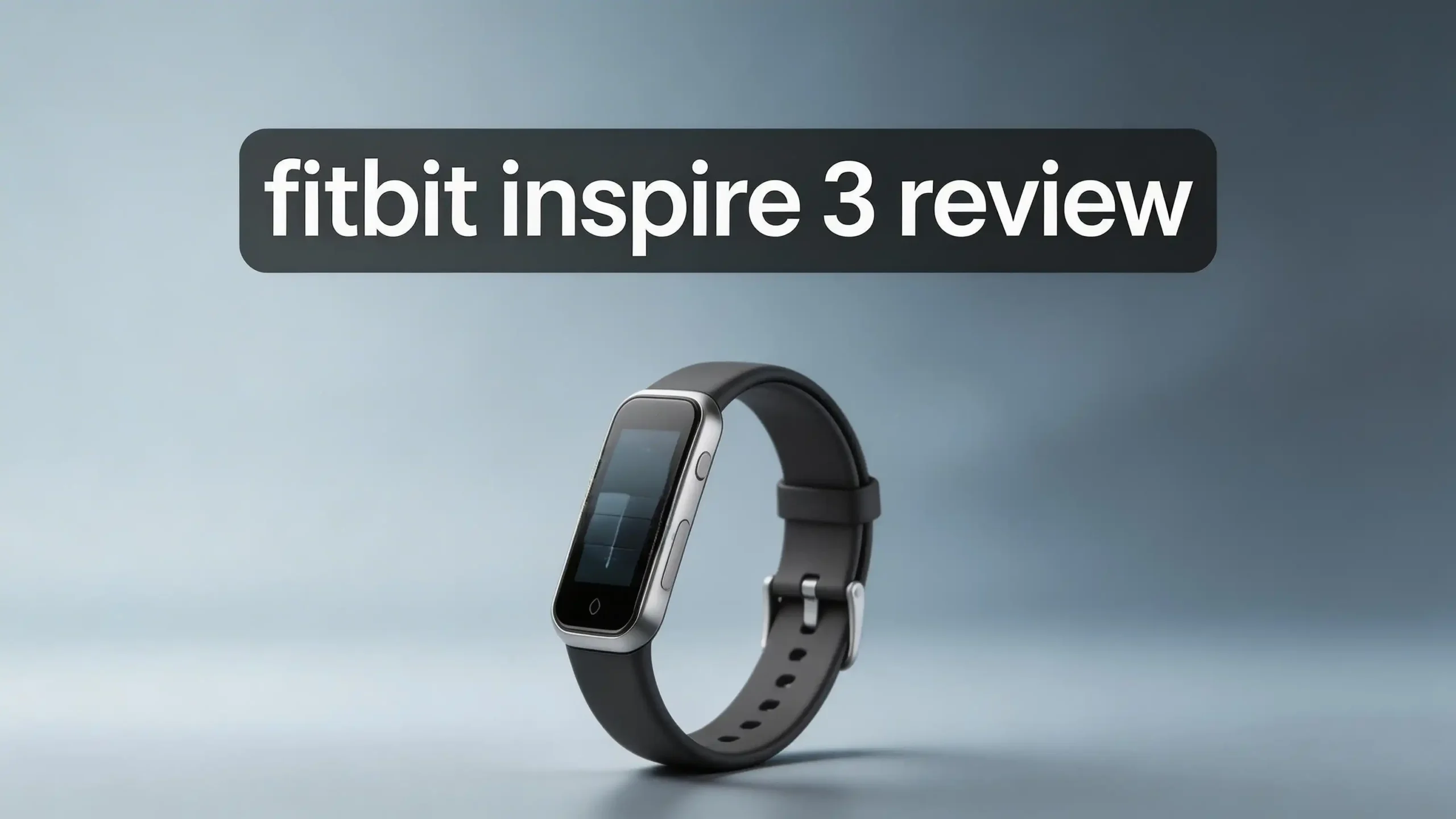
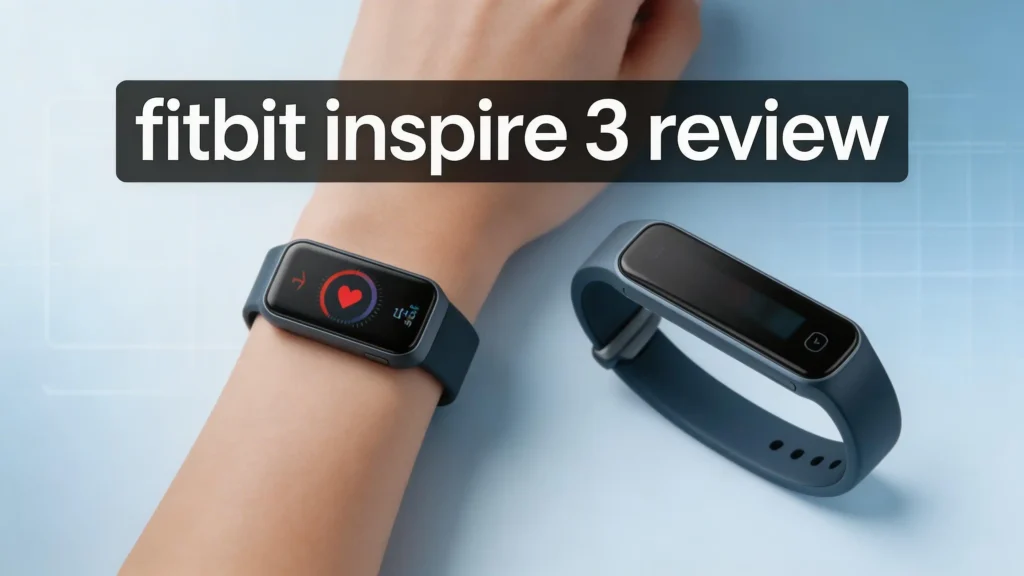
The Fitbit Inspire 3 has a slim, lightweight design that weighs very little on your wrist. It uses a rectangular body with rounded edges and a comfortable silicone band. The tracker comes in three color options: Midnight Zen/Black, Lilac Bliss/Black, and Morning Glow/Black.
The band is soft and flexible. You can wear it all day and all night without discomfort. Many users report forgetting they have it on, which is a big plus for 24/7 health tracking.
The body is made of durable plastic with an aluminum case. It feels solid but not heavy. The water resistance rating is 50 meters, so you can swim, shower, and sweat without worry.
One downside is the small screen. The display measures about 1.5 inches diagonally. It is readable, but people with larger hands or those who prefer big watch faces may find it limiting. Still, the compact size is exactly what many people want in a fitness band.
Fitbit Inspire 3 Display and Interface
The Inspire 3 features a color AMOLED touchscreen. This was a big upgrade from the Inspire 2, which had a grayscale display. Colors are bright and vibrant. Text is sharp and easy to read in most lighting conditions.
You navigate the interface by swiping up, down, left, and right. There is also a side button for quick actions. The software is smooth and responsive. Menus load fast, and switching between screens feels natural.
Fitbit offers a variety of clock faces you can download through the Fitbit app. You can customize the display to show your preferred stats at a glance. Steps, heart rate, calories burned, and active zone minutes are all available on the main screen.
The always-on display option is available but comes at the cost of battery life. With it turned on, battery life drops from 10 days to about 3 days. For most users, the raise-to-wake feature works well enough to skip the always-on mode.
Fitbit Inspire 3 Health and Fitness Tracking Features
The Inspire 3 tracks a solid range of health and fitness metrics. It monitors your heart rate 24 hours a day, 7 days a week. It also tracks your steps, calories burned, distance traveled, and active zone minutes.
You get access to over 20 exercise modes. These include running, walking, cycling, swimming, yoga, and more. The tracker can also auto-detect certain exercises if you forget to start a session manually.
SpO2 monitoring measures your blood oxygen levels during sleep. This can help identify potential breathing issues. The skin temperature sensor tracks changes over time, which may provide early health insights.
The Active Zone Minutes feature is one of Fitbit’s best tools. It uses your heart rate to track how much time you spend in fat burn, cardio, and peak heart rate zones. This gives you a clear picture of workout intensity without guessing.
Stress management is another key feature. The tracker provides a daily Stress Management Score based on your heart rate variability, exertion, and sleep patterns.
Top 3 Alternatives for Fitbit Inspire 3

- Display: 1.62" Amoled Display 192 x 490 pixels 1,200 nits peak brightness
- Battery: 233 mAh Battery up to 21 days of battery life or 9 days with its always-on display (AOD) activated
Last update on 2026-10-23 / Affiliate links / Images from Amazon Product Advertising API

- Easy-to-use, comfortable smart fitness tracker, once setup through the Garmin Connect app, has a touchscreen and button interface plus a...
- Get an uninterrupted picture of your health with up to 7 days of battery life in smartwatch mode; safe for swimming and showering, too

Last update on 2026-10-23 / Affiliate links / Images from Amazon Product Advertising API

- LARGE HD AMOLED DISPLAY: Experience the brilliance of our fitness tracker watch with a 1.47" always-on display, 112% larger than band 5 for...
- EXTENDED BATTERY LIFE: Your fitness watch offers up to 18 days on a single charge, thanks to the 232 mAh battery. No need to constantly...
Last update on 2026-10-23 / Affiliate links / Images from Amazon Product Advertising API
Fitbit Inspire 3 Battery Life Performance
Battery life is one of the biggest selling points of the Inspire 3. Fitbit claims up to 10 days on a single charge. Real-world tests from sites like Business Insider and CNET confirm this is accurate for typical use.
If you use the always-on display, that number drops to about 3 days. Heavy use of notifications, continuous exercise tracking, and SpO2 monitoring during sleep can also shorten battery life slightly.
Charging is done through a proprietary magnetic cable. It snaps onto the back of the tracker. A full charge takes about 1 to 2 hours, which is reasonable.
Most users find they charge the band once a week. This makes it easy to maintain a daily tracking routine without constant interruptions. Compared to many smartwatches that need daily charging, the Inspire 3 feels freeing.
The battery performance has remained consistent even for users who have owned the device for over a year. Some long-term owners on Reddit report slight degradation after 18+ months, but the band still lasts 7 to 8 days in those cases.
Fitbit Inspire 3 Sleep Tracking Accuracy
Sleep tracking is a strong suit of the Fitbit Inspire 3. It breaks your sleep into light, deep, and REM stages. Each morning, you receive a Sleep Score out of 100 that summarizes your sleep quality.
The Fitbit app provides a detailed breakdown. You can see how long you spent in each stage, how many times you woke up, and your restlessness throughout the night. This data appears in clean, easy-to-read charts.
Research shows that Fitbit’s sleep tracking has an overall accuracy of around 86% to 88%. It performs best with light sleep detection and is less precise with deep sleep. REM sleep accuracy sits around 74%, according to published studies.
The Smart Wake feature is a nice bonus. It wakes you up during a light sleep phase within a window you set. This helps you feel more refreshed compared to a standard alarm that might pull you out of deep sleep.
For a sub-$100 tracker, the sleep data is impressive. It gives casual users enough insight to improve their sleep habits. However, it is not a medical device and should not replace professional sleep studies.
Fitbit Inspire 3 Heart Rate Monitoring
The Inspire 3 uses an optical heart rate sensor on its underside. It reads your heart rate continuously throughout the day and night. You can view real-time data on the tracker or in the Fitbit app.
Accuracy is solid for a wrist-based tracker. It performs well during rest and moderate activity. During high-intensity workouts, wrist-based sensors can sometimes lag or show minor inaccuracies. This is true for most fitness bands in this price range.
The tracker also supports heart rate zone tracking. It divides your activity into fat burn, cardio, and peak zones. This helps you understand how hard you are working during each session.
Resting heart rate trends are available in the app. You can track changes over weeks and months. A lower resting heart rate often signals improved cardiovascular fitness. This long-term view is useful for people building consistent exercise habits.
The Inspire 3 also supports Irregular Rhythm Notifications. This feature checks for signs of atrial fibrillation (AFib) while you are still or sleeping. It is not a diagnostic tool, but it can alert you to seek medical attention if something unusual appears.
Fitbit Inspire 3 Stress Management Tools
The Inspire 3 includes a daily Stress Management Score. This score ranges from 1 to 100 and is based on your heart rate variability, physical exertion, and sleep patterns. A higher score means your body is handling stress better.
You can view your stress trends over time in the Fitbit app. This helps you identify patterns. Maybe you notice your score drops on busy workdays or improves after a restful weekend.
The tracker also includes guided breathing sessions. These are short, on-wrist exercises that walk you through deep breathing for 2 or 5 minutes. The band vibrates in rhythm to guide your inhale and exhale.
Mindfulness reminders can be set throughout the day. They gently nudge you to pause and take a few breaths. For people who deal with daily stress, these small prompts can make a real difference.
While the stress tools are not as advanced as what you find on higher-end Fitbit models like the Sense 2, they are more than adequate for most users. The Inspire 3 gives you practical, actionable stress data without overwhelming you with numbers.
Fitbit Inspire 3 Exercise Modes and Workout Tracking
The Inspire 3 supports over 20 exercise modes. Popular options include running, walking, biking, swimming, elliptical, and yoga. You can start a workout from the tracker’s exercise menu and track your progress in real time.
The auto-detect feature recognizes certain activities and logs them without manual input. It works well for walking and running. For other exercises, you will want to start the session manually to get accurate data.
During workouts, the screen shows your heart rate, duration, calories burned, and active zone minutes. You can glance at your wrist mid-exercise to check your intensity level.
One notable limitation is the lack of built-in GPS. The Inspire 3 relies on connected GPS from your phone. If you leave your phone behind during a run, you will not get pace or route data. This is the biggest gap compared to trackers like the Fitbit Charge 6 or Garmin devices with onboard GPS.
Post-workout summaries appear in the Fitbit app with detailed stats. You can review your performance, compare sessions, and track improvement over time. The app does a great job of presenting this data in a clear format.
Fitbit Inspire 3 App Experience and Fitbit Premium
The Fitbit app is available on iOS and Android. It serves as the control center for your Inspire 3. You can view all your health data, adjust settings, download clock faces, and set goals.
The app’s dashboard is clean and well organized. You see your daily stats front and center. Tapping any metric opens a detailed view with charts and trends.
Fitbit Premium is a paid subscription service that unlocks extra features. It includes a Daily Readiness Score, advanced sleep analytics, guided workouts, and mindfulness sessions. The Inspire 3 comes with a 6-month free Premium trial for new members.
After the trial, Premium costs around $9.99 per month or $79.99 per year. Some users feel the free version of the app offers enough value. Others enjoy the deeper insights and guided content that Premium provides.
Google’s integration means you now need a Google account to use the Fitbit app. The migration deadline is May 19, 2026. If you already have a Google account, the transition is straightforward. The app walks you through the process step by step.
Fitbit Inspire 3 Google Account Migration Update for 2026
This is a critical topic for anyone buying or currently using a Fitbit in 2026. Google requires all Fitbit users to move their accounts to Google by May 19, 2026. After this date, you can no longer access Fitbit with a standalone Fitbit account.
If you do not migrate, your data will be scheduled for deletion starting July 15, 2026. This includes your historical health data, workout logs, and sleep records. Google extended this deadline once already, moving it from February 2, 2026, to the current May date.
The migration process is simple. Open the Fitbit app, follow the prompts, and link your existing data to a Google account. Your health history transfers over. The Fitbit app continues to work as before, just under a Google login.
Some users have expressed frustration about this forced change. Privacy concerns and the requirement to use a Google account are common complaints in community forums. However, the tracker itself continues to function normally after migration.
If you are buying the Inspire 3 in 2026, set up with a Google account from the start. This avoids the migration hassle entirely and ensures long-term access to your data and device features.
Fitbit Inspire 3 Pros and Cons
Pros of the Fitbit Inspire 3 include its affordable price, long battery life, comfortable design, and accurate sleep tracking. The color AMOLED display is a welcome upgrade from older models. Stress management tools add genuine value for everyday wellness.
The Fitbit app ecosystem remains one of the best in the fitness tracker market. It presents data clearly and makes it easy to set goals and track progress. Social features like challenges with friends add a fun, motivational element.
Cons include the missing built-in GPS. Outdoor runners and cyclists will need to carry their phone for location data. The small screen can feel cramped for reading notifications or navigating menus.
Fitbit Premium is needed to unlock the full range of features. Without it, you miss out on the Daily Readiness Score and advanced analytics. The proprietary charging cable is another minor inconvenience. If you lose it, you cannot use a standard charger.
The Google account requirement may also be a dealbreaker for some buyers. If you prefer to keep your health data separate from Google’s ecosystem, this is worth considering before purchase.
Who Should Buy the Fitbit Inspire 3 in 2026?
The Fitbit Inspire 3 is ideal for beginners and casual fitness enthusiasts. If you want to track your steps, monitor your sleep, and keep an eye on your heart rate, this band does the job well.
It is also a great choice for anyone on a tight budget. At under $100, it delivers features that rival trackers costing twice as much. The 10-day battery life means you spend less time charging and more time tracking.
People who prefer a slim, lightweight wearable over a bulky smartwatch will appreciate the Inspire 3’s form factor. It looks like a simple bracelet and draws minimal attention.
However, if you need built-in GPS, a larger screen, or advanced workout analytics, consider the Fitbit Charge 6 or a Garmin alternative. Serious athletes may find the Inspire 3 too basic for their training needs.
If you already own a Fitbit and are happy with the ecosystem, the Inspire 3 is a solid, low-cost upgrade or replacement. Just make sure to complete your Google account migration before the May 2026 deadline.
Fitbit Inspire 3 vs Fitbit Charge 6
The Fitbit Charge 6 is the next step up from the Inspire 3. It costs around $140 to $160 and includes built-in GPS, an EDA sensor for stress tracking, and Google Maps integration.
The Charge 6 has a slightly larger display and supports Google Wallet for contactless payments. It also offers YouTube Music controls if you have a Premium subscription. These smart features make it feel closer to a smartwatch.
Both devices share the same core health tracking features. Heart rate, sleep tracking, SpO2, stress management, and Active Zone Minutes are present on both models.
The biggest difference is GPS. The Charge 6 has it built in. The Inspire 3 does not. If you run, walk, or cycle outdoors and want accurate route and pace data without your phone, the Charge 6 is the better pick.
Battery life on the Charge 6 is about 7 days, compared to 10 on the Inspire 3. If maximum battery life matters more than GPS, the Inspire 3 wins this round. It comes down to your priorities and budget.
Final Verdict on the Fitbit Inspire 3 in 2026
The Fitbit Inspire 3 remains a strong budget fitness tracker in 2026. It covers the essentials with reliable accuracy. Sleep tracking, heart rate monitoring, stress management, and long battery life make it a dependable daily companion.
It is not perfect. The missing GPS, small screen, and Fitbit Premium paywall are real drawbacks. The Google account migration adds an extra step that some users may find annoying.
But for under $100, the value proposition is clear. Wirecutter, PCMag, and Business Insider all continue to recommend it as one of the best affordable fitness trackers available right now.
If you want a simple, effective, and affordable way to track your health in 2026, the Fitbit Inspire 3 is still an excellent choice. Just be sure to set it up with a Google account and enjoy the ride.
- Inspire 3 is the tracker that helps you find your energy, do what you love and feel your best – all you have to do is wear it;
- Compatible with Apple iOS 16.4 or higher and Android OS 11.0 or higher
Last update on 2026-10-23 / Affiliate links / Images from Amazon Product Advertising API
Frequently Asked Questions
Is the Fitbit Inspire 3 still worth buying in 2026?
Yes. The Fitbit Inspire 3 still performs well for basic fitness and health tracking. It offers accurate step counting, solid sleep tracking, heart rate monitoring, and stress management. For under $100, it remains one of the best budget fitness trackers on the market. Major review sites continue to recommend it in their 2026 roundups.
Does the Fitbit Inspire 3 have GPS?
No. The Fitbit Inspire 3 does not have built-in GPS. It uses connected GPS through your smartphone. This means you need to carry your phone during outdoor activities like running or cycling to get location and pace data. If built-in GPS is essential, consider the Fitbit Charge 6 or a Garmin tracker.
How long does the Fitbit Inspire 3 battery last?
Fitbit rates the Inspire 3 battery at up to 10 days with normal use. Real-world testing confirms this is accurate for most users. Turning on the always-on display reduces battery life to about 3 days. Heavy notification use and continuous SpO2 tracking can also shorten the battery slightly.
Do I need a Google account to use the Fitbit Inspire 3?
Yes, as of 2026, you need a Google account to use the Fitbit app and access your data. The deadline for migrating standalone Fitbit accounts to Google is May 19, 2026. Setting up with a Google account from the start is the easiest approach for new buyers.
Is the Fitbit Inspire 3 waterproof?
The Fitbit Inspire 3 is water resistant up to 50 meters. You can wear it while swimming, showering, or during sweaty workouts. However, Fitbit recommends drying the band after water exposure to prevent skin irritation. It is not rated for scuba diving or high-velocity water activities.
How accurate is the Fitbit Inspire 3 for sleep tracking?
Research indicates that Fitbit’s sleep tracking has an overall accuracy of approximately 86% to 88%. It performs best at detecting light sleep stages. Deep sleep and REM detection are slightly less precise but still useful for general sleep awareness. The Sleep Score feature provides a helpful daily summary of your rest quality.

Hi there! I’m Jinny, the tech enthusiast behind GadgetInsight. I spend my days unboxing the newest devices, diving deep into their features, and figuring out how they can genuinely improve your life – or if they’re worth your hard-earned money at all.